You're all caught up—no notifications available.
Explore All Exams at KGS


All Exams
Explore All Exams at KGS

Khan Sir Courses
Geography I Polity I History | World Map I Indian Map I Economics I Biology

UPSC & State PSC
UPSC I BPSC I UP-PSC I MP-PSC

State Exams
UP I Bihar I MP | Rajasthan

NEET | JEE | CUET
NEET | JEE | CUET

Defence Exams
NDA I CDS I CAPF I AFCAT I SSB I Agniveer

Police Exams
UP SI | Bihar SI | Delhi Police | UP Constable

SSC Exams
CGL I CPO I CHSL I MTS I SSC GD I Delhi Police

Foundation Courses
Physics I Chemistry I Biology I History I Geography I Polity I NCERT I Math I English | Map I Reasoning

Railway Exams
RRB | RPF

Teaching Exams
TET | Teaching | UGC

Banking Exams
SBI | RBI | IBPS

Engineering Exams
Civil | Electrical | Mechanical
UGC NET
UGC NET/JRF
News Highlights provides you with the best compilation of the Daily News Highlights taking place across the globe: National, International, Sports, Science and Technology, Banking, Economy, Agreement, Appointments, Ranks, and Report and General Studies
1.
• TAIWAN'S MILITARY Wednesday fired its new HIMARS rocket system, simulating an attack on an invading Chinese force and demonstrating its "shoot-and-scoot" ability to evade counterstrikes.
• THE MILITARY said the drill was to demonstrate the HIMARS' mobility and ability to "shoot-and-scoot" - withdrawing after firing to avoid enemy radar - so as to "greatly improve battlefield survivability".
• HIMARS IS one of Ukraine's main strike systems and has been used multiple times during the war with Russia. With a range of 300 kms it could strike targets in China's southeastern province.
2.
The US plan to open an Ebola quarantine facility in Kenya was meant to help contain the outbreak by isolating American patients exposed to the virus.
Instead, it has caused an out-break of violence and political rancor, with hundreds of Kenyans taking to the streets in protest. Last month, Secretary of State Marco Rubio said that no Ebola patients would be allowed to enter the United States after the World Health Organization announced a dangerous out-break in Congo. Rubio later appeared to soften that stance.
3.
Anthropic is fresh off a $65-billion funding round that valued it at $965 billion.
OpenAl is targeting a valuation that could touch the $1-trillion mark.
SpaceX is seeking a valuation of $1.75 trillion.
4.
The Breakthrough of the Zojila Tunnel, a 13-km passage being carved through the Himalayas at an altitude of 11,578 feet, is a major milestone for one of India's most challenging infrastructure projects. But unlike tunnels bored through relatively stable rock formations else-where, excavation in the Himalayas comes with a unique set of geological and environmental risks.
5.
The CNT Act was enacted by the British in 1908 after decades of Adivasi resistance (including Birsa Munda's uprising) to protect customary land rights in Chotanagpur region.
The central objective was preventing the transfer of Adivasi land to non-Adivasis and legally recognising traditional land tenure systems.
The Act remains one of the strongest safeguards for tribal land in Jharkhand.
6.
At a time when global political attention to climate change appears to be receding, a new assessment has confirmed earlier estimates that 2025 was the third warmest year on record. Importantly, this annual study, called the Indicators of Global Climate Change or IGCC, found that the contribution of human activities to the overall warming observed in 2025 was possibly the highest ever.
7.
In a relief for India, the state-owned National Fertilizers Limited's (NFL) latest tender for import of 1.7 million tonnes (mt) of urea has received landed price (cost plus freight) quotes of $444.9-449.3 per tonne. This is less than half the winning landed price bids of $935-959 per tonne for an earlier tender issued by Indian Potash Limited (IPL) for import of 2.5 mt.
8.
Global preparedness remains strongest against crises the world has repeatedly confronted Ebola-and weakest against novel events such as the Hantavirus.
9.
In two recent articles, Surjit Bhalla argues that the weakening of reforms, declining investor confidence, and the revised BIT framework signal a loss of economic momentum. While the concerns raised deserve attention, the conclusions drawn are neither fully supported by evidence nor reflective of the broader economic reality.
First, any analysis of economic performance must account for global shocks. When crisis years are excluded, India's average GDP growth during 2005-2014 stands at approximately 7.2 per cent, compared to nearly 7.4 per cent during 2014-2024, achieved despite Covid, supply-chain disruptions, geopolitical conflicts, and tightening global financial conditions. The evidence suggests considerable resilience in India's growth trajectory despite far more adverse external conditions
10.
In Today's world, scientific capability is closely linked with economic competitive-ness, technological sovereignty, public health, sustainability, national security, and long-term resilience. India's future will depend not only on what it manufactures but also on what it discovers. Research and innovation remain outside the active imagination of large sections of industry, philanthropy, CSR ecosystems, and society at large. This gap deserves more attention.
11.
Despite the capital outflows from financial markets and subdued net foreign direct investment (FDI) inflows, India managed to record a Balance of Payments (BoP) surplus of $7.22 billion in the January-March 2026 quarter, aided by a factor thought to be at risk from the ongoing war in West Asia: remittances from abroad.
In the first quarter of 2026, Indians working abroad sent home $31.07 billion-the most in 13 years, as per Reserve Bank of India (RBI) data-registering a year-on-year growth of 34%. But what is more striking is the annual figure.
12.
The Securities and Exchange Board of India (SEBI) has proposed that asset management companies (AMCs) may disclose aggregate remuneration along with the total number of employees covered under the disclosure instead of disclosing the remuneration of individual employees, a move which experts believe would reduce transparency around the remuneration of 'star fund managers.
13.
US consumer inflation increased at its fastest pace in three years in May as the West Asia conflict raised the price of gasoline and other energy products, giving more ammunition for the Federal Reserve to keep interest rates unchanged into 2027.
14.
Just two months ago, Anthropic publicly warned that its most advanced Al system, Claude Mythos Preview, was too risky for a general release.
The company argued that the model had demonstrated an unprecedented ability to discover and exploit software vulnerabilities, raising fears that it could accelerate cyberattacks if widely deployed.
15.
The Centre on Wednesday approved the increase in prices of at least four medicines, including two commonly used chemotherapy drugs, whose shortage across the country was affecting treatment of cancer patients.
"NPPA has sought the approval of the DoP [Department of Pharmaceuticals] ... to increase price in respect to four formulations.... In this regard, it is conveyed that the in-principle approval of the Hon'ble Minister... is granted," said a letter dated June 7 from the DoP to the National Pharmaceutical Pricing Authority (NPPA).
16.
The Hindu Kush Himalaya (HKH) region, the source of at least 10 large river basins in Asia, including Ganga, Indus and Brahmaputra in India, is likely to witness below-normal rainfall and above-normal temperatures in the upcoming monsoon, according to a new analysis.
The HKH region is a mountain arc stretching 3,500 km across Afghanistan, Pakistan, Nepal, India, China, Bangladesh, Myanmar and Bhutan. Home to thousands of glaciers and large river basins such as Ganga, Indus, Brahmaputra, Yangtze, Irrawady, Mekong and Amu Darya, they support the food and livelihood security of about two billion people in this region of Asia.
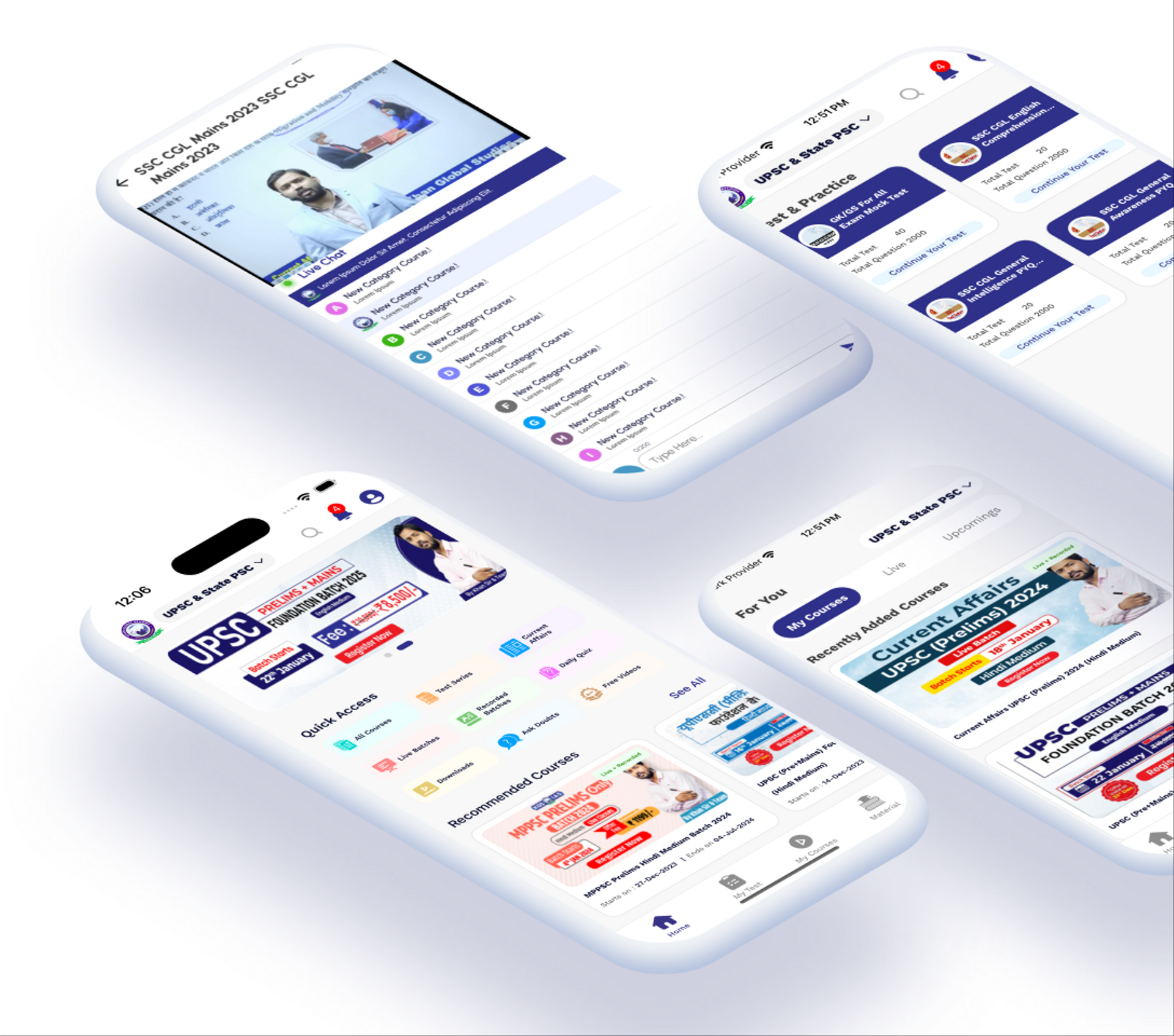
The most trusted learning platform on your phone
With our training programs, learning online can be a very exciting experience! Take the next step toward achieving your professional and personal objectives


Course Related Query:
Ask Your DoubtsStore Related Query:[email protected]NEET | JEE | CUET
NCERT Books
Resources
We love learning. Through our innovative solutions, we encourage ourselves, our teams, and our Students to grow. We welcome and look for diverse perspectives and opinions because they enhance our decisions. We strive to understand the big picture and how we contribute to the company’s objectives. We approach challenges with optimism and harness the power of teamwork to accomplish our goals. These aren’t just pretty words to post on the office wall. This is who we are. It’s how we work. And it’s how we approach every interaction with each other and our Students.
Come with an open mind, hungry to learn, and you’ll experience unmatched personal and professional growth, a world of different backgrounds and perspectives, and the freedom to be you—every day. We strive to build and sustain diverse teams and foster a culture of belonging. Creating an inclusive environment where every students feels welcome, appreciated, and heard gives us something to feel (really) good about.
Get Free academic Counseling & Course Details