You're all caught up—no notifications available.
Explore All Exams at KGS


All Exams
Explore All Exams at KGS

Khan Sir Courses
Geography I Polity I History | World Map I Indian Map I Economics I Biology

UPSC & State PSC
UPSC I BPSC I UP-PSC I MP-PSC

State Exams
UP I Bihar I MP | Rajasthan

NEET | JEE | CUET | Boards
NEET | JEE | CUET | Boards

Defence Exams
NDA I CDS I CAPF I AFCAT I SSB I Agniveer

Police Exams
UP SI | Bihar SI | Delhi Police | UP Constable

SSC Exams
CGL I CPO I CHSL I MTS I SSC GD I Delhi Police

Foundation Courses
Physics I Chemistry I Biology I History I Geography I Polity I NCERT I Math I English | Map I Reasoning

Railway Exams
RRB | RPF

Teaching Exams
TET | Teaching | UGC

Banking Exams
SBI | RBI | IBPS

Engineering Exams
Civil | Electrical | Mechanical
UGC NET
UGC NET/JRF
Current Affairs provides you with the best compilation of the Daily Current Affairs taking place across the globe: National, International, Sports, Science and Technology, Banking, Economy, Agreement, Appointments, Ranks, and Report and General Studies

SYLLABUS
GS-3: Issues Relating to Development and Management of Social Sector/Services relating to Health, Education, Human Resources.
Context: The recently released Global Monitoring Report provides the most recent global data on progress towards universal health coverage (UHC) and tracks progress towards Sustainable Development Target 3.8.
About Universal Health Coverage (UHC)
• Universal Health Coverage (UHC) means that all people have access to the full range of quality essential health services they need, when and where they need them, without suffering financial hardship.
• It rests on two core pillars:
• In 2015, United Nations Member States adopted the 2030 Agenda for Sustainable Development, committing to achieve Universal Health Coverage by 2030 under SDG Target 3.8 – “Achieve universal health coverage, including financial risk protection”.
About the UHC Global Monitoring Report 2025
• The report is prepared jointly by the World Bank and the World Health Organization (WHO).
• The revised global UHC monitoring framework uses the following two indicators under SDG 3.8:
• The 2025 edition marks the first use of revised UHC indicators, providing an updated framework to assess trends and gaps since 2000.
Key Findings of the Report
• Slow global progress towards UHC:
• Uneven Progress in Health Service Coverage:
• Global poverty reduction drove progress on financial hardship in health:
• Weak Financial Protection persists: An increasing number of people face disproportionately high out-of-pocket health costs, particularly in middle-income countries.
• Stark Health Inequalities:
Key Recommendations of the Report
• Ensure essential health care is free at the point of access for the poor to reduce the growing share of people living in poverty who spend on health.
• Strengthen publicly funded compulsory prepaid coverage to accelerate the reduction in financial hardship among the whole population and reduce the rate of large OOP.
• Address high OOP health spending on medicines, which absorbs on average 56% of OOP health spending in most countries.
• Accelerate expansion of essential NCD services, strengthen primary health care, encompassing prevention, early detection and treatment, to reduce barriers that hinder access to or disrupt the continuity of health services.
• Adopt multisectoral UHC approaches, recognizing that determinants of health and UHC drivers extend beyond the health sector.
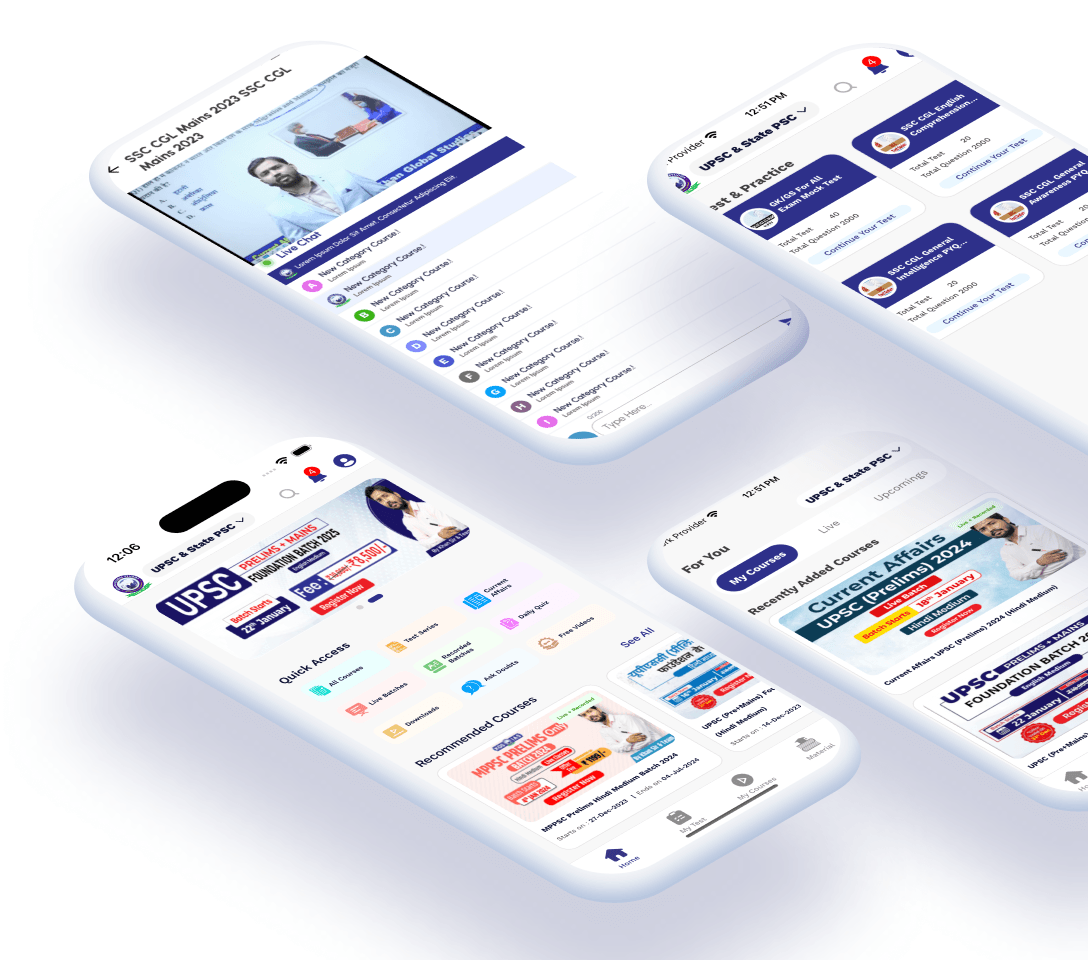
The most trusted learning platform on your phone
With our training programs, learning online can be a very exciting experience! Take the next step toward achieving your professional and personal objectives


NCERT Books
Resources
We love learning. Through our innovative solutions, we encourage ourselves, our teams, and our Students to grow. We welcome and look for diverse perspectives and opinions because they enhance our decisions. We strive to understand the big picture and how we contribute to the company’s objectives. We approach challenges with optimism and harness the power of teamwork to accomplish our goals. These aren’t just pretty words to post on the office wall. This is who we are. It’s how we work. And it’s how we approach every interaction with each other and our Students.
Come with an open mind, hungry to learn, and you’ll experience unmatched personal and professional growth, a world of different backgrounds and perspectives, and the freedom to be you—every day. We strive to build and sustain diverse teams and foster a culture of belonging. Creating an inclusive environment where every students feels welcome, appreciated, and heard gives us something to feel (really) good about.
Get Free academic Counseling & Course Details