You're all caught up—no notifications available.
Explore All Exams at KGS


All Exams
Explore All Exams at KGS

Khan Sir Courses
Geography I Polity I History | World Map I Indian Map I Economics I Biology

UPSC & State PSC
UPSC I BPSC I UP-PSC I MP-PSC

State Exams
UP I Bihar I MP | Rajasthan

NEET | JEE | CUET
NEET | JEE | CUET

Defence Exams
NDA I CDS I CAPF I AFCAT I SSB I Agniveer

Police Exams
UP SI | Bihar SI | Delhi Police | UP Constable

SSC Exams
CGL I CPO I CHSL I MTS I SSC GD I Delhi Police

Foundation Courses
Physics I Chemistry I Biology I History I Geography I Polity I NCERT I Math I English | Map I Reasoning

Railway Exams
RRB | RPF

Teaching Exams
TET | Teaching | UGC

Banking Exams
SBI | RBI | IBPS

Engineering Exams
Civil | Electrical | Mechanical
UGC NET
UGC NET/JRF
Current Affairs provides you with the best compilation of the Daily Current Affairs taking place across the globe: National, International, Sports, Science and Technology, Banking, Economy, Agreement, Appointments, Ranks, and Report and General Studies

SYLLABUS
GS-3: Achievements of Indians in science & technology; indigenization of technology and developing new technology; Awareness in the fields of IT, Space, Computers, robotics, nano-technology, bio-technology and issues relating to intellectual property rights.
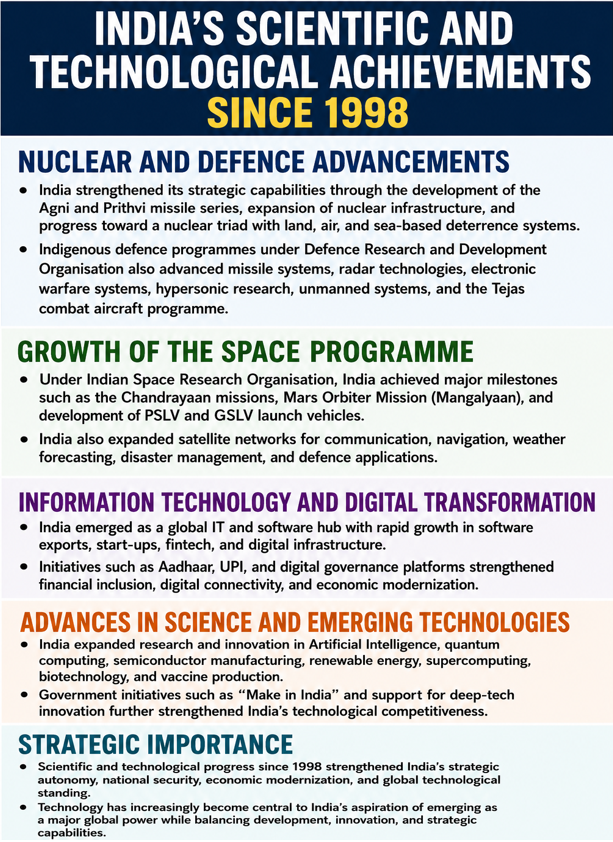
Context: National Technology Day is observed every year on May 11 to commemorate the successful Pokhran-II nuclear tests conducted in 1998 and to celebrate India’s achievements in science, innovation, and indigenous technology.
About National Technology Day
• India celebrates National Technology Day annually on May 11 to recognise the country’s achievements in science, technology, and innovation.
• The day commemorates the successful Pokhran-II nuclear tests conducted in Rajasthan on May 11, 1998, which established India as a nuclear-capable state and demonstrated its indigenous scientific and technological strength.
• The Government of India officially declared May 11 as National Technology Day in 1999 under the leadership of former Prime Minister Atal Bihari Vajpayee to honour scientists, engineers, and researchers who contributed to India’s technological advancement.
• National Technology Day also highlights the contribution of A. P. J. Abdul Kalam, who played a major role in India’s missile and nuclear programmes and became a symbol of scientific self-reliance.
• The 2026 theme is “Responsible Innovation for Inclusive Growth”, focusing on indigenous technology, AI, deep-tech innovation, and inclusive technological development.
About the Pokhran-II Nuclear Tests
• The Pokhran-II nuclear tests, code-named Operation Shakti, were conducted by India at the Pokhran Test Range in Rajasthan on May 11 and 13, 1998.
• India carried out five underground nuclear tests, including one thermonuclear (fusion) device and four fission devices.
• The five devices were named:
1. Shakti-I
2. Shakti-II
3. Shakti-III
4. Shakti-IV
5. Shakti-V
• The first three tests were conducted on May 11, while two additional tests took place on May 13.
• Pokhran-II followed India’s first nuclear test conducted in 1974 under the code name “Smiling Buddha.”
• The tests were conducted under conditions of extreme secrecy and demonstrated India’s indigenous scientific and strategic capabilities despite international technological restrictions.
• May 11, 1998, also witnessed the successful test-firing of the Trishul missile and the first flight of the indigenous Hansa-3 aircraft.
Significance of Pokhran-II
• Strategic Significance: Pokhran-II officially established India as a nuclear weapons state and strengthened its strategic deterrence capability.
• Scientific and Technological Significance: The operation showcased India’s advanced indigenous capabilities in nuclear science, engineering, electronics, materials science, and defence technology.
• Political and Diplomatic Impact: Following the tests, several countries, including the United States and Japan, imposed sanctions and restrictions on India.
• Symbol of Self-Reliance: Pokhran-II became a symbol of India’s scientific excellence, technological independence, and national confidence.
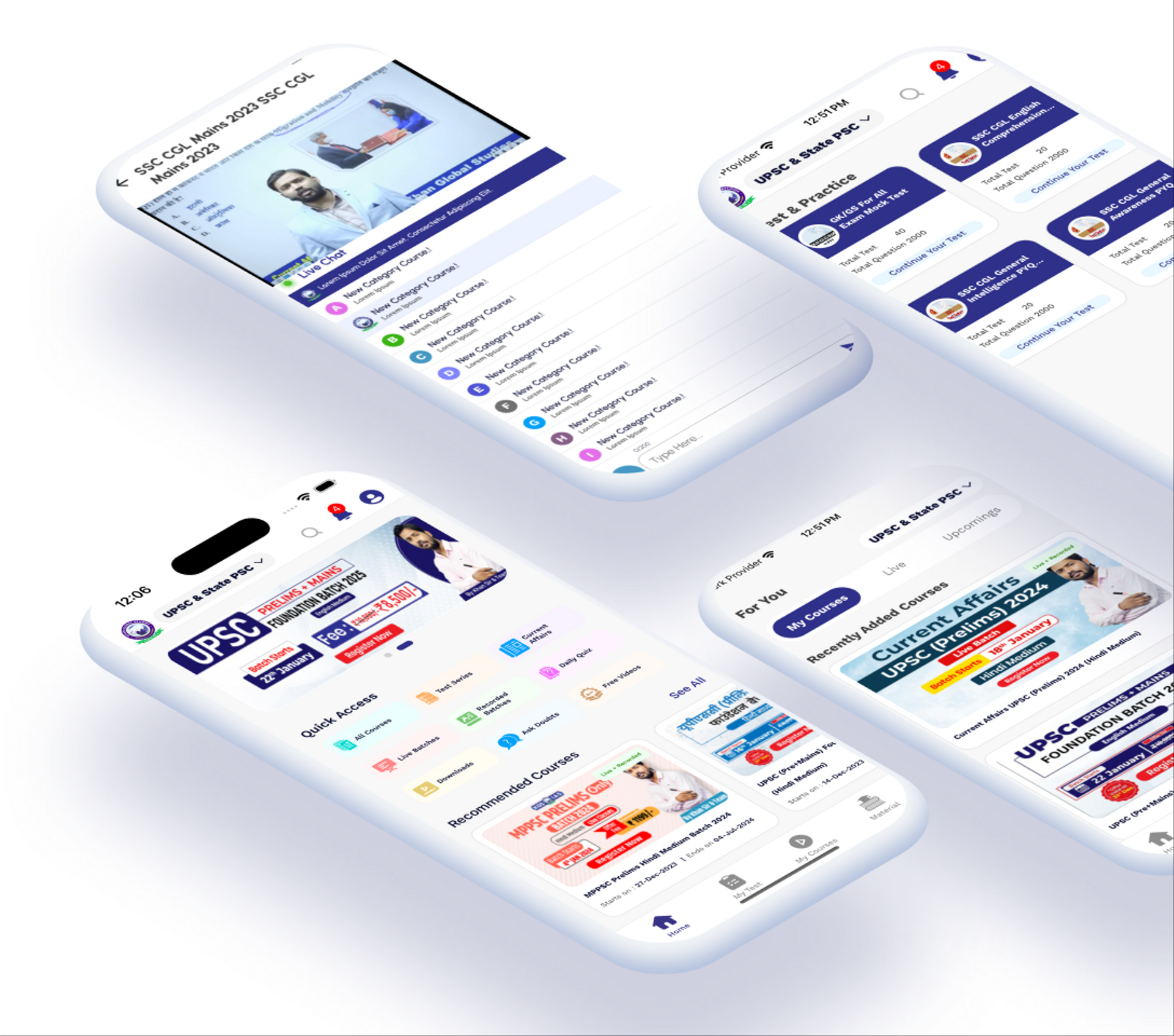
The most trusted learning platform on your phone
With our training programs, learning online can be a very exciting experience! Take the next step toward achieving your professional and personal objectives



Course Related Query:
Ask Your DoubtsStore Related Query:[email protected]NCERT Books
Resources
We love learning. Through our innovative solutions, we encourage ourselves, our teams, and our Students to grow. We welcome and look for diverse perspectives and opinions because they enhance our decisions. We strive to understand the big picture and how we contribute to the company’s objectives. We approach challenges with optimism and harness the power of teamwork to accomplish our goals. These aren’t just pretty words to post on the office wall. This is who we are. It’s how we work. And it’s how we approach every interaction with each other and our Students.
Come with an open mind, hungry to learn, and you’ll experience unmatched personal and professional growth, a world of different backgrounds and perspectives, and the freedom to be you—every day. We strive to build and sustain diverse teams and foster a culture of belonging. Creating an inclusive environment where every students feels welcome, appreciated, and heard gives us something to feel (really) good about.
Get Free academic Counseling & Course Details